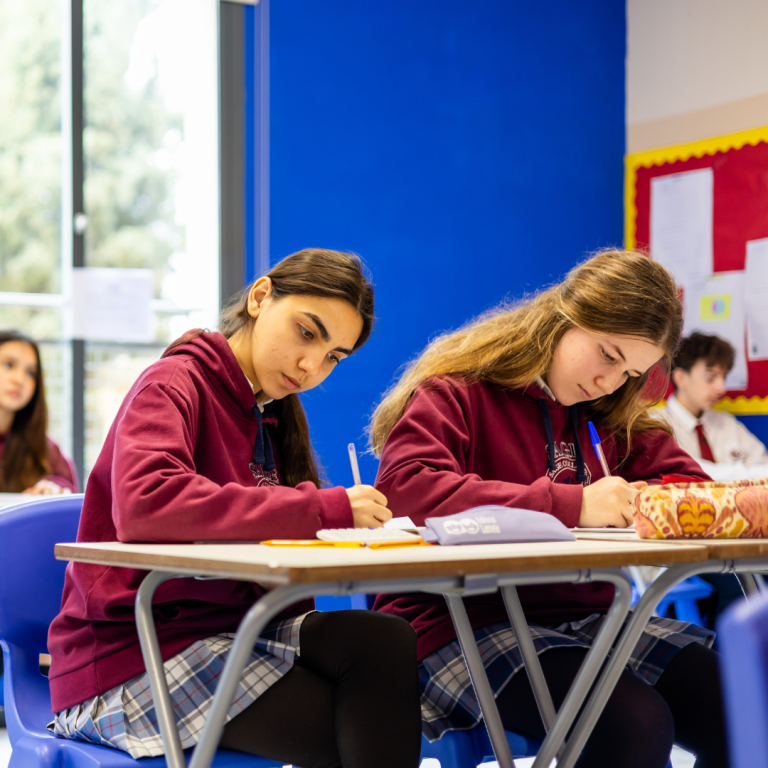
Why a sense of belonging matters for learning

Feeling part of a school community is not simply a matter of emotional wellbeing. It is also connected to motivation, participation and students’ overall learning experience. The PISA 2025 results highlight the importance of creating school environments where every student feels safe, heard and valued.
When considering what makes a good education, families often focus on the curriculum, academic results, facilities and future opportunities. However, another factor can have a profound influence on a student’s school experience: their sense of belonging.
For a young person, belonging means much more than attending lessons every day. It means knowing they have a place within the school community, being able to build positive relationships with teachers and peers, and feeling confident that support is available when they need it.
At Sage College, a British international school in Jerez de la Frontera, Cádiz, we recognise the close relationship between learning and wellbeing. Personal support and the development of a positive school environment are therefore important elements of our educational approach.
What does a sense of belonging mean at school?
A sense of school belonging refers to the extent to which students feel accepted, included, respected and connected to their school community.
It is not simply about having friends in class. It also involves relationships with teachers, feelings of safety, opportunities to participate in school life and the confidence to express opinions or ask for help.
Students who feel that they belong may find it easier to engage actively in their learning. When trust is established, asking questions, acknowledging difficulties, accepting mistakes and approaching new challenges can become less daunting.
Conversely, feeling isolated or excluded can affect motivation and make participation more difficult, even when a student has the academic ability to succeed.
A sense of belonging should therefore be recognised as an important dimension of education rather than an optional addition to school life.
What does PISA 2025 reveal about school belonging?
PISA 2025, conducted by the Organisation for Economic Co-operation and Development (OECD) and published in 2026, examines not only the academic competencies of 15-year-old students but also different aspects of their educational experiences.
One of its notable findings is an improvement in students’ sense of belonging across numerous education systems.
According to the results, 39 education systems recorded an increase in the proportion of students who reported feeling that they belonged at school compared with 2022. In addition, 48 systems recorded a reduction in the proportion of students reporting loneliness.
These findings are significant because they show that, even against a backdrop of challenges in international academic performance, some aspects of students’ school experiences have improved.
PISA also identifies associations between school climate, belonging and academic achievement. Although these relationships do not mean that feeling included automatically leads to higher grades, they reinforce the importance of considering the environment in which learning takes place.
The connection between emotional wellbeing and learning
Learning requires attention, effort, curiosity and a willingness to overcome difficulties. All of these can be influenced by how students experience school emotionally.
An environment in which students feel respected and supported can encourage more active participation. It can also make it easier for them to ask questions, seek guidance and develop confidence in their abilities.
This is particularly important during adolescence, when social relationships, personal identity and the need for acceptance often become increasingly significant.
The relationship between wellbeing and learning also works in both directions. Feeling included may encourage students to engage more fully in their education, while making academic progress and receiving recognition for their efforts can strengthen their confidence and connection to school.
For this reason, emotional wellbeing should not be viewed as separate from academic education, but as an important part of a well-rounded learning experience.
The role of teachers in building a positive school community
Relationships between teachers and students play an essential role in developing a sense of belonging.
Beyond delivering subject knowledge, teachers help establish trust, communicate clear expectations and create spaces where students feel comfortable participating without fear of making mistakes.
Getting to know individual students, understanding their needs and recognising their progress can help build positive educational relationships.
Teacher support is also an important consideration in PISA 2025. The findings indicate a positive association between students’ perceived teacher support, their attitudes towards learning and academic performance.
Within this context, personalised attention becomes particularly valuable. When teachers can closely monitor students’ progress, they are better placed to identify difficulties, provide guidance and support both academic achievement and personal development.
Pastoral Care at Sage College: supporting students beyond the classroom
Within the British education system, Pastoral Care refers to the support provided to students in relation to their wellbeing, personal development, relationships and overall school experience.
At Sage College, this approach is reflected in the work of our dedicated Pastoral Care Department, which supports students throughout their educational journey.
The school also operates a structured Behaviour Framework based on five stages: Remind, Reflect, Review, Reform and Redirect.
This framework aims to provide a consistent and predictable approach to behaviour, encouraging reflection and opportunities for improvement.
Sage College also provides targeted wellbeing and emotional self-regulation interventions, alongside established safeguarding procedures for responding to concerns about students’ welfare.
These structures reflect a central principle of our educational approach: students need support not only with their academic progress, but also with their personal development.
An international community where students learn to belong
The international character of Sage College adds another dimension to the idea of belonging.
As a British international school in Cádiz, our community brings together students from different cultural and linguistic backgrounds.
This diversity creates opportunities for young people to interact with others whose experiences, perspectives and traditions may differ from their own.
However, international diversity does not automatically guarantee inclusion. For diversity to become a positive educational experience, schools must actively encourage respect, empathy, communication and participation.
The aim is for every student to feel able to maintain their individual and cultural identity while also becoming part of a shared school community.
How can families help strengthen a sense of belonging?
A sense of belonging is also supported by the relationship between school and home.
Maintaining open communication, showing interest in children’s school experiences and listening to their concerns can help identify difficulties before they become more serious.
Families can encourage this connection by asking not only about grades, but also about friendships, enjoyable activities and situations that may be causing uncertainty or discomfort.
At Sage College, communication between school and families forms part of our approach to student support, particularly when individual learning or wellbeing needs require additional attention.
Collaboration between both environments allows important information to be shared and helps everyone work towards a common goal: enabling each student to develop within a supportive, respectful and trusting environment.
Education is also about helping every student feel they belong
The PISA 2025 findings remind us that the quality of education cannot be measured solely through examinations or grades.
Students’ experiences are also shaped by the relationships they build, the support they receive and the confidence they feel when participating in school life.
At Sage College, British International School of Jerez, we believe that a well-rounded education should support both academic learning and each student’s personal development and wellbeing.
Preparing young people for the future is not simply about providing knowledge. It also means helping them build confidence, establish positive relationships, respect others and find their place within a community.
A sense of belonging does not guarantee academic success, but it can help create the conditions in which students are able to learn, grow and face new challenges.
Source: OECD (2026), PISA 2025 Results (Volume I): Future-Ready Students. This article draws on the international findings and the analysis prepared by the Sage College Pastoral Department.