EMOTIONAL WELLBEING AND ACADEMIC ACHIEVEMENT: WHY THEY GO HAND IN HAND

Can emotional wellbeing influence how students learn? The answer requires us to look beyond grades. Motivation, confidence, personal relationships and the ability to manage challenges are all part of the educational experience. The PISA 2025 results offer an opportunity to reflect on the importance of these factors in learning.
At Sage College, a British international school in Jerez de la Frontera, Cádiz, we believe education is about more than delivering academic knowledge. It also involves supporting each student’s personal development and helping young people build the skills they need to face academic and everyday challenges.
What does emotional wellbeing mean in a school environment?
Emotional wellbeing at school refers to how students experience their educational environment and the resources available to help them navigate everyday situations.
It includes emotional safety, positive relationships with teachers and peers, confidence in expressing difficulties and the ability to recognise and manage emotions.
This does not mean that students should feel happy all the time. Frustration when facing a difficult task, nervousness before an examination or disagreements with classmates are normal parts of growing up.
What matters is that students develop strategies for responding to these experiences and know where to seek support when they need it.
An educational approach that values emotional wellbeing does not aim to remove every challenge. Instead, it helps students develop the tools they need to overcome difficulties progressively.
What does PISA 2025 tell us about wellbeing and learning?
PISA 2025, conducted by the Organisation for Economic Co-operation and Development (OECD) and published in 2026, examines the academic competencies of 15-year-old students alongside different aspects of their educational experiences.
The factors explored include curiosity, perseverance, goal setting, help seeking and growth mindset.
According to the findings, these dimensions of student engagement are positively associated with performance in science.
PISA 2025 also identifies positive associations between teacher support, academic outcomes and students’ attitudes towards learning.
These findings do not mean that emotional wellbeing alone determines academic achievement. Performance depends on many factors, including teaching quality, prior knowledge, educational opportunities and individual circumstances.
Nevertheless, the results help explain why academic and personal development should be considered connected aspects of education.
Motivation and confidence are part of the learning process
Learning constantly involves encountering new situations. Sometimes students understand a concept quickly; at other times, they need to practise, make mistakes, review their answers and try again.
How they interpret these experiences can influence their willingness to continue learning.
A student who understands that mistakes are part of learning may be more willing to approach a demanding task than someone who sees every difficulty as evidence of an inability to succeed.
This is where growth mindset becomes particularly relevant: the understanding that abilities can be developed through learning, practice, appropriate strategies and support.
Perseverance is equally important. Continuing to make an effort when something becomes difficult requires students to manage frustration and recognise that progress is not always immediate.
Supporting students emotionally does not mean lowering academic expectations. It means helping them develop the resources needed to meet those expectations.
Emotional self-regulation: a skill for school and beyond
Emotional self-regulation involves recognising our emotions and using strategies that help us respond appropriately to different situations.
Within a school environment, this can be particularly useful during examinations, presentations, disagreements between classmates or periods of increased academic pressure.
Students who learn to recognise when they feel anxious, frustrated or overwhelmed can begin to use strategies to regain their composure, organise their priorities or seek support.
These skills do not necessarily develop automatically with age. They benefit from experience, guidance and practice.
At Sage College, the Wellbeing Department has already delivered targeted interventions for students, including a Year 10 workshop on self-regulation and examination anxiety. This incorporates breathing techniques and a structured approach known as the Reset framework.
Such initiatives reflect the value of providing practical strategies that students can apply in real academic situations.
The role of Pastoral Care in a British school
Within the British education system, Pastoral Care plays an important role in supporting students.
It encompasses wellbeing, relationships, personal development and the individual circumstances that can influence a student’s school experience.
At Sage College, this approach is supported by a dedicated Pastoral Care Department and a wider support structure that includes individual needs monitoring, wellbeing interventions and safeguarding procedures.
The school also follows a structured Behaviour Framework consisting of five stages: Remind, Reflect, Review, Reform and Redirect.
This framework aims to provide a consistent approach to behaviour while encouraging reflection and opportunities for improvement.
Having established support structures means that wellbeing is not addressed solely through occasional activities, but forms part of the school’s wider educational organisation.
The importance of teacher–student relationships
Emotional wellbeing is also shaped by the everyday interactions that take place at school.
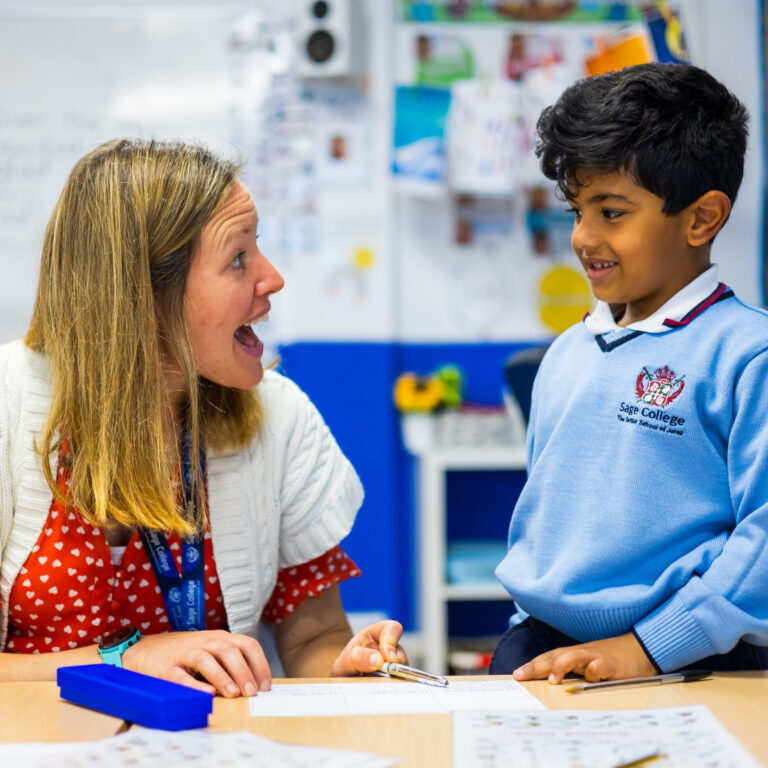
Feeling listened to by a teacher, receiving guidance when something becomes difficult or knowing that a trusted adult is available can help students develop confidence.
Positive educational relationships can make it easier for students to ask questions, share concerns and participate in school activities.
PISA 2025 highlights a positive association between teacher support and favourable attitudes towards learning.
Within this context, personalised attention can help teachers understand individual strengths, difficulties and needs.
The aim is not simply to identify when students require academic support, but also to recognise circumstances that may be affecting their wider educational experience.
Families and schools: a shared responsibility
Students’ emotional wellbeing is not developed exclusively in the classroom.
Families play an essential role by providing support, listening to their children’s concerns and maintaining open communication with the school.
The PISA 2025 analysis identifies a decline in students’ perceived family support across many countries and economies compared with 2022, particularly among boys and students from disadvantaged backgrounds.
This finding encourages reflection on the importance of strengthening partnerships between schools and families.
At Sage College, family meetings are an established part of the support process for students with Individual Education Plans (IEPs). School–family communication is also supported in both English and Spanish to help families remain involved.
When schools and families share relevant information and work together, it becomes easier to identify needs and provide consistent support.
Combining academic ambition with emotional wellbeing
Emotional wellbeing and academic ambition are not competing priorities.
A school can maintain high expectations while also teaching students how to manage effort, recognise their emotions, ask for help and become more independent.
Preparing young people for further education involves more than mastering academic content. It also means learning how to organise themselves, respond to uncertainty, adapt to new situations and build positive relationships.
At Sage College, British International School of Jerez, we aim to bring together academic learning, personal support, individualised attention and the development of skills that students can use throughout their lives.
The PISA 2025 results remind us that understanding how students learn also requires us to consider how they experience education.
A well-rounded education is not about choosing between academic achievement and emotional wellbeing. It is about recognising the importance of both in each student’s development.
Source: OECD (2026), PISA 2025 Results (Volume I): Future-Ready Students. This article draws on the international report and the analysis prepared by the Sage College Pastoral Department.