BEYOND GRADES: CURIOSIY, PERSEVERANCE AND A GROWTH MINDSET
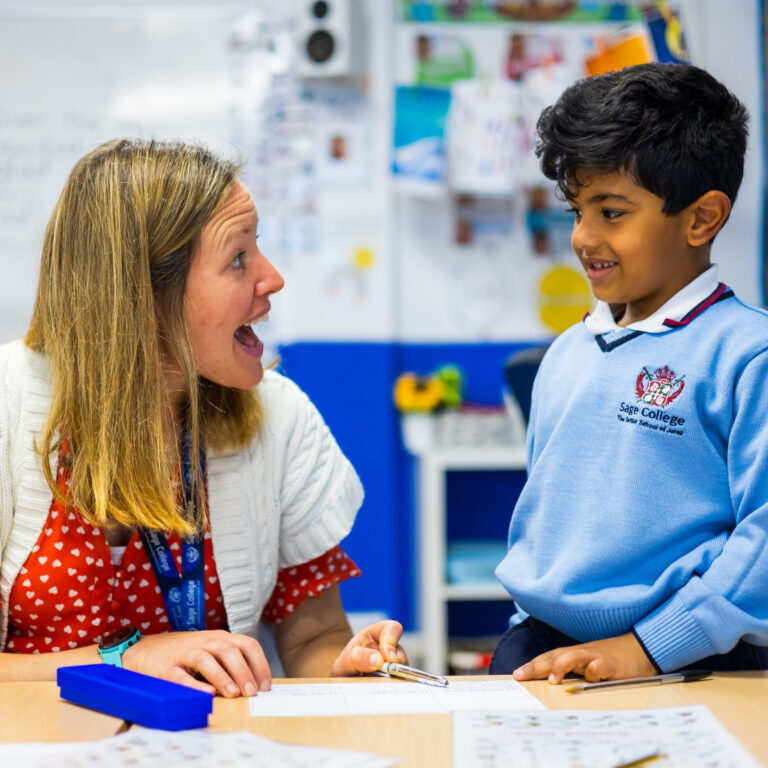
What happens when a student cannot solve a problem on their first attempt? Do they give up, ask for help or look for another way forward? It may seem like an ordinary classroom situation, but the response can tell us a great deal about how learning takes place.
For many years, grades have been one of the main ways of measuring academic progress. Yet learning involves much more than achieving a good mark. Curiosity, perseverance and the ability to see mistakes as part of the learning process also play an important role.
The PISA 2025 results highlight these skills and their relationship with learning. At Sage College, a British international school in Jerez de la Frontera, Cádiz, we believe that developing these abilities is part of preparing students to face new challenges, both inside and outside the classroom.
Why grades do not tell the whole story
A grade can reflect the outcome of a particular assessment, but it does not always reveal everything that happened during the learning process.
Two students may achieve the same mark through very different experiences. One might understand the material quickly, while the other may need additional practice, ask questions and work through several mistakes.
Both have reached an outcome, but their learning journeys have not been identical.
This does not mean academic assessments are unimportant. They are essential tools for understanding progress, identifying difficulties and informing teaching.
However, academic performance and the skills that enable students to continue learning are not exactly the same thing.
Alongside assessing what students already know, it is therefore worth considering how they approach what they have yet to understand.
What does PISA 2025 tell us about attitudes towards learning?
The PISA 2025 study, conducted by the Organisation for Economic Co-operation and Development (OECD), assesses the competencies of 15-year-old students across different countries and economies.
In addition to academic performance, the study examines aspects of student engagement, including curiosity, perseverance, goal setting, help seeking and growth mindset.
Its findings identify positive associations between several of these characteristics and performance in science.
These results need to be interpreted carefully. An association does not necessarily mean that one factor directly causes another. Nor does it suggest that every curious or persevering student will automatically achieve higher grades.
What the findings do suggest is that students’ approaches to learning deserve attention alongside their academic knowledge.
Curiosity: learning because we want to understand
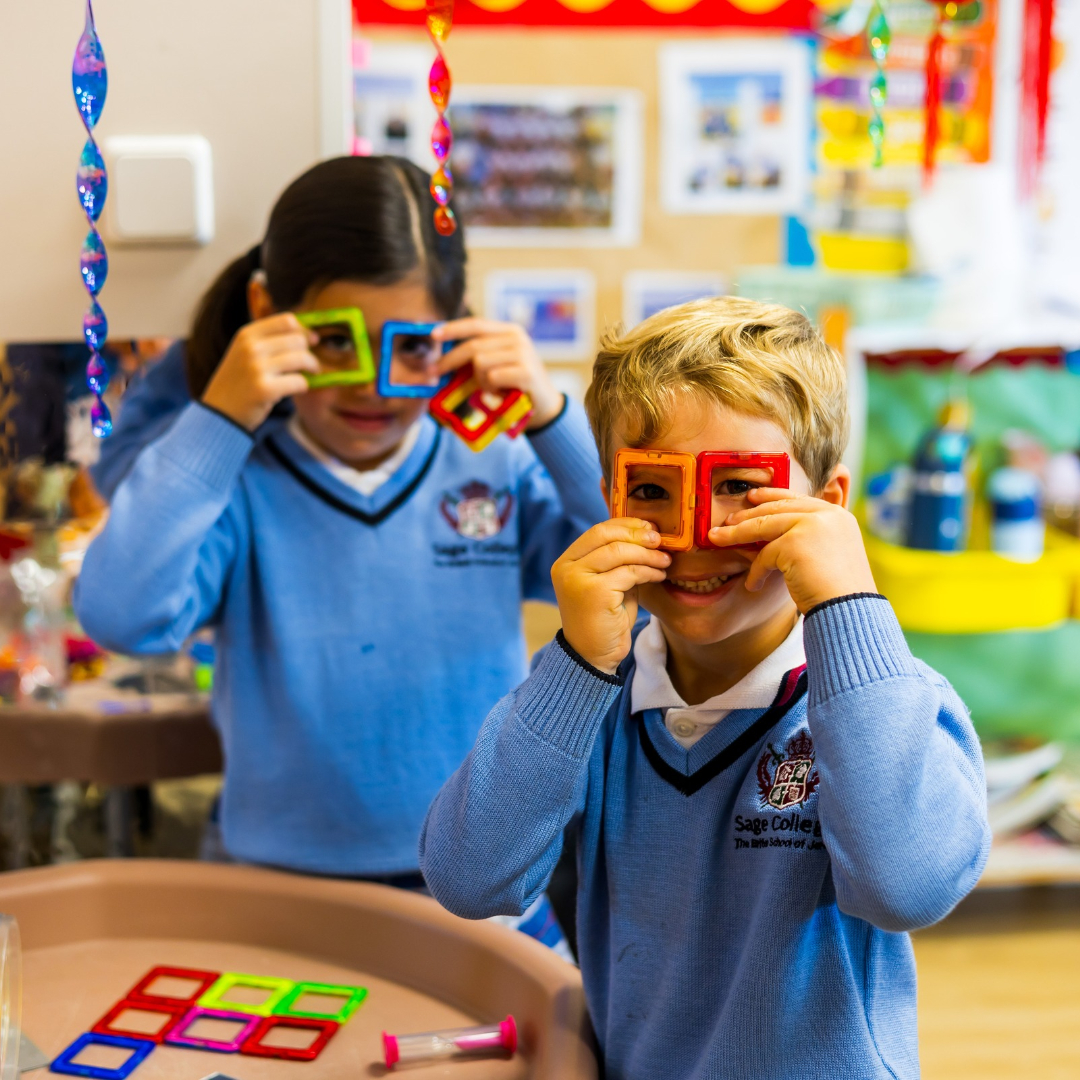
Young children often ask questions about everything around them. They want to know why it rains, how an object works or what might happen if they try something differently.
This natural curiosity can become an important resource for learning.
A curious student may not be satisfied with simply memorising an answer. They may want to understand the reasons behind it, connect new information with previous experiences or explore other possibilities.
In science, for example, there is a difference between studying how the heart responds to exercise and investigating it through an experiment.
When students measure their heart rate at rest, take part in physical activity and then measure it again, they can observe a phenomenon they have been studying in class.
The experience does not replace scientific explanations, but it creates opportunities to ask questions, compare observations and develop a deeper understanding.
This kind of practical learning, which is also part of the educational experience at Sage College, helps students connect curriculum content with real-life situations.
Perseverance: learning to keep going when things become difficult
Not every skill can be mastered immediately.
Solving an equation, understanding a complex text, preparing a presentation or developing a sporting skill may require repeated attempts.
Perseverance involves continuing to work towards a goal, even when difficulties arise.
However, perseverance does not mean endlessly repeating an approach that is not working.
Sometimes progress requires students to stop, review their method, try a different strategy or seek guidance.
For example, a student struggling with a maths problem might need to break it into smaller steps, revisit an earlier example or ask their teacher to explain a particular part.
Recognising when to continue, when to change approach and when to ask for help is just as important as maintaining effort.
Perseverance should not simply be associated with working longer, but with learning to use effort effectively.
What is a growth mindset?
A growth mindset is the understanding that abilities can develop through learning, practice, appropriate strategies and support.
It does not mean that everyone will achieve identical outcomes or that effort alone guarantees success.
Instead, it recognises that a person’s current level of ability does not necessarily define what they may be capable of learning in the future.
Consider the difference between these two statements:
“I’m not good at maths.”
“I don’t understand this maths topic yet.”
The second statement does not remove the difficulty, but it leaves room for progress.
This change in perspective can help students interpret mistakes as useful information about what they need to revisit.
A growth mindset is not simply about praising students for trying. Meaningful progress also requires clear goals, effective strategies, feedback and genuine opportunities for improvement.
Why mistakes can be valuable for learning
Making mistakes can feel uncomfortable, particularly when students worry about how classmates might react or believe they should already know the answer.
Nevertheless, mistakes can provide valuable information.
An incorrect answer may reveal which part of a calculation needs reviewing. An experiment that produces an unexpected result may prompt further questions. A presentation that does not go as planned may help a student prepare more effectively next time.
For these experiences to support learning, students need an environment where they feel able to participate, express uncertainty and receive guidance without being defined by their mistakes.
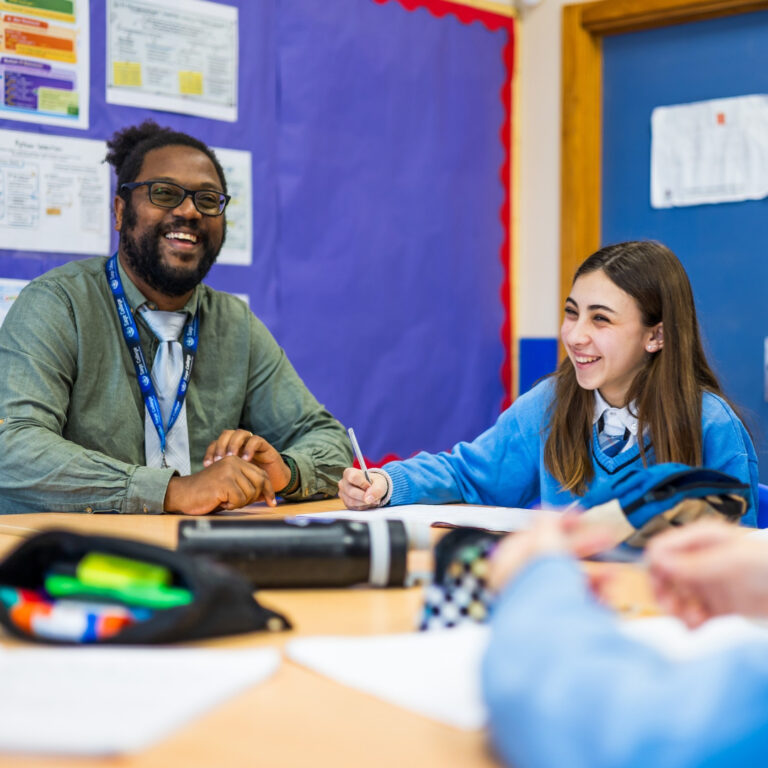
The relationship between teachers and students is especially relevant here.
A clear explanation, constructive feedback or a question that encourages students to reconsider their reasoning can turn an error into an opportunity to learn.
The aim is not to suggest that making mistakes is always positive, but to help students use mistakes to make progress.
How can teachers encourage these skills?
Curiosity, perseverance and growth mindset are not developed simply through motivational messages.
Students need opportunities to practise them during everyday learning.
Teachers can encourage curiosity by asking open-ended questions, introducing problems connected to real-life situations and inviting students to explain how they reached a conclusion.
Perseverance can be developed through appropriately challenging tasks, achievable goals and guidance on what to do when an approach is unsuccessful.
A growth mindset can be supported through specific feedback about learning processes and opportunities to review and improve work.
Individual needs also matter. Tasks that are too easy may provide limited opportunities for progress, while excessive difficulty without appropriate support can lead to frustration.
Finding a suitable level of challenge is an important part of teaching.
What can families do at home?
Families can also encourage these skills through everyday conversations and experiences.
When a child returns home from school, asking only what grade they received may leave out much of what they experienced during the day.
Questions such as “What did you discover today?”, “What did you find most difficult?” or “How did you manage to solve it?” create opportunities to discuss learning from a different perspective.
It can also be helpful to show interest in the strategies children used, rather than focusing exclusively on the result.
When a child becomes frustrated because something is not working, offering support does not always mean solving the problem immediately.
Sometimes it is more useful to help them identify what they already understand, what they need to review and who might be able to help.
The aim is to develop independence progressively while recognising that students continue to need guidance and encouragement.
Preparing students to become lifelong learners
The academic, professional and technological worlds are constantly evolving. The knowledge students acquire at school is essential, but it cannot prepare them for every challenge they may encounter in the future.
They also need to learn how to ask questions, adapt to unfamiliar situations, reconsider their ideas and continue developing their abilities.
At Sage College, British International School of Jerez, we aim to combine academic knowledge, practical experiences and personal support.
Learning science through experiments, developing skills across different subjects and having opportunities to tackle challenges all contribute to this educational experience.
The PISA 2025 findings encourage us to continue reflecting on what learning really means.
Because a good education is not measured only by what a student knows today, but also by the tools they develop to keep learning tomorrow.
Source: OECD (2026), PISA 2025 Results (Volume I): Future-Ready Students. This article draws on the themes explored in the international report.