LEARNING TO LEARN: INDEPENDENCE, GOAL SETTING AND SEEKING HELP
When we think of a successful student, we often imagine someone who achieves good grades, completes assignments on time and understands their teachers’ explanations. However, another skill is just as important: learning how to learn.
Managing time, identifying areas for improvement, setting goals and recognising when to ask for help are abilities that develop throughout a student’s education. Furthermore, they remain valuable long after school.
The PISA 2025 results encourage us to reflect on these skills and their relationship with learning. At Sage College, a British international school in Jerez de la Frontera, Cádiz, we believe preparing students for the future also means helping them develop independence, responsibility and confidence when facing new challenges.
What does learning to learn actually mean?
Learning to learn involves developing the skills needed to understand and manage one’s own learning process.
It is not simply about acquiring knowledge. It also means recognising how we learn, identifying difficulties and choosing strategies that may help us overcome them.
For example, imagine two students preparing for an examination. The first reads through their notes several times. The second tests what they can remember without looking at the material, identifies topics they have not yet mastered and spends additional time reviewing them.
Both students are studying. However, the second is using strategies that help them assess their progress and adjust their approach.
This ability is closely related to metacognition, an educational term describing the process of reflecting on our own thinking and learning.
Developing these skills can help students become more actively involved in their education. Over time, it can also make them less dependent on constant adult instructions.
What does PISA 2025 tell us about independent learning?
The PISA 2025 study, conducted by the Organisation for Economic Co-operation and Development (OECD), examines the academic competencies of 15-year-old students alongside different aspects of their educational experiences.
The factors explored include goal setting, perseverance, curiosity, help seeking and growth mindset.
The findings identify positive associations between several of these characteristics and performance in science.
Nevertheless, these results need to be interpreted carefully. The study does not demonstrate that developing a particular skill will automatically lead to higher grades. In fact, academic performance depends on many different factors.
Even so, PISA 2025 highlights an important idea: understanding how students learn requires us to consider their approach to learning, as well as the knowledge they acquire.
Independence does not mean learning without support
One common misconception about independent learning is that students should be able to do everything without help.
However, an independent learner is not necessarily someone who never asks questions or solves every difficulty alone.
True independence involves taking increasing responsibility for learning while knowing how to use the resources and support available.
This includes recognising when an explanation has been understood, when additional practice is needed and when guidance would be useful.
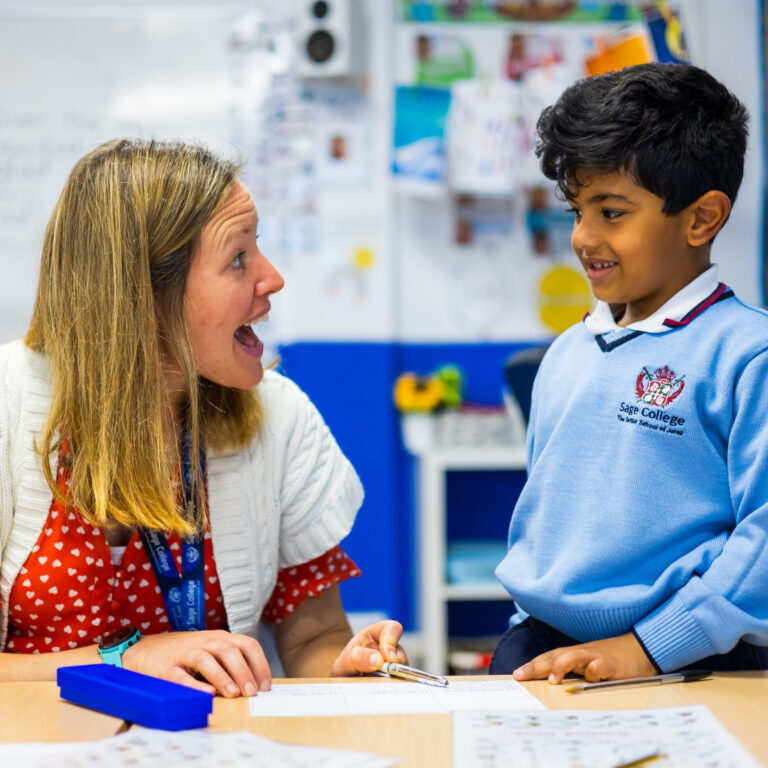
Imagine a student struggling with a maths problem. First, they review the question and check their notes. Then, when they realise they are still having difficulty, they approach their teacher with a specific question.
In this situation, asking for help is not a sign of dependence. Instead, it shows that the student is learning to recognise their needs and respond appropriately.
Goal setting: turning intentions into a plan
Many students begin the week thinking they need to study more, improve in a particular subject or prepare more effectively for examinations.
However, there is an important difference between having an intention and setting an actionable goal.
“I want to get better at maths” expresses a wish.
By contrast, “I will practise three equation problems every Tuesday and Thursday and review my mistakes with my teacher” describes a specific action.
Therefore, learning goals are most useful when they are clear, realistic and allow students to monitor progress.
Breaking larger challenges into smaller steps is equally important. Preparing for a final examination may feel overwhelming when viewed as a single task. However, it becomes more manageable when students identify the topics they need to revise and distribute the work over time.
In addition, goal setting involves reviewing plans. When a strategy is not working, changing the approach may be more useful than simply spending additional hours studying.
Why knowing when to ask for help matters
Sometimes students avoid asking questions because they worry about making mistakes, interrupting a lesson or appearing less capable than their classmates.
However, help seeking is a skill that can be learned and can make a meaningful difference to the educational experience.
Not all requests for help offer the same learning opportunities.
Asking “What’s the answer?” is different from explaining, “I’ve managed the first two steps, but I don’t understand how to continue.”
The second question identifies the difficulty more precisely. As a result, a teacher can provide guidance without completing the task for the student.
To develop this skill, students need to feel comfortable expressing uncertainty. They also need to understand that asking questions is a normal part of learning.
This is why positive teacher–student relationships are particularly important, an aspect also explored in the PISA 2025 analysis.
Time management and effective study habits
Independence is also connected to organising tasks and managing the time available.
During the early years of education, adults generally provide considerable structure. As students progress through Secondary and Sixth Form, they need to take greater responsibility for planning assignments, assessments and other commitments.
Consequently, developing effective study habits can help them navigate this transition.
Useful strategies include spreading revision across several sessions, practising recall without looking at notes, reviewing mistakes and taking appropriate breaks.
It is also important to distinguish between spending time studying and checking whether learning has actually taken place.
For example, sitting in front of a textbook for two hours does not guarantee that its content has been understood. By contrast, explaining a concept in one’s own words or attempting a question without consulting the answer can provide clearer information about what has been learned.
Learning to make decisions and take responsibility
Independence does not develop overnight.
A Primary pupil needs a different level of guidance from a Year 12 student preparing for university.
For this reason, responsibilities should increase progressively, taking account of age, maturity and individual needs.
During the earlier stages, this might involve preparing materials for an activity, following a simple routine or choosing between two ways of completing a task.
Later, students may become more involved in planning projects, organising revision and evaluating which learning strategies work best for them.
The aim is not to withdraw support before students are ready. Instead, it is to provide opportunities to make decisions and learn from their consequences within a safe environment.
How teachers can develop independent learners
Independence does not emerge simply because teachers stop providing instructions.
On the contrary, it requires guidance, practice and opportunities for students to take a gradually more active role.
Teachers can help by modelling how to organise a task, explaining assessment criteria and providing feedback that identifies possible next steps.
Furthermore, they can encourage reflection through questions such as “Which strategy did you use?”, “Why do you think it didn’t work?” or “What would you do differently next time?”
This kind of guidance helps students develop a better understanding of their own learning processes.
At Sage College, individualised support and progress monitoring form part of our educational structure. Teachers and student support teams work to take account of learners’ needs as their abilities develop.
In this way, we aim to combine guidance with increasing responsibility, adapting support to different stages of education.
How can families encourage independence at home?
Families also play an important role in helping children become more independent.
It is understandable that parents want to prevent their children from becoming frustrated, forgetting assignments or making mistakes. However, immediately solving every difficulty can reduce opportunities for decision-making practice.
An alternative is to offer guidance through questions.
If a child says they have too much homework, we might ask what needs to be completed first or how the work could be divided into smaller tasks.
When they do not understand an activity, we can help them identify the part they find difficult before offering a solution.
And when something does not go as expected, we can discuss what they might change next time.
Of course, this does not mean leaving students alone with challenges beyond their current abilities. Independence develops through support, and that support should reflect each child’s age and individual needs.
Preparing for university and adult life
As students progress through their education, managing their own learning becomes increasingly important.
During qualifications such as IGCSEs and A Levels, students need to organise more complex material, prepare for assessments and take greater academic responsibility.
Later, at university or in further training, they will need to make decisions about how to manage their time, when to seek guidance and how to respond to unfamiliar situations.
Furthermore, these skills are relevant beyond education.
Setting goals, evaluating progress and finding appropriate resources are useful abilities in many personal and professional contexts.
At Sage College, British International School of Jerez, we aim to combine academic development with the gradual acquisition of skills that help students prepare for the future.
Ultimately, the PISA 2025 results remind us that learning involves more than accumulating knowledge.
It also means developing the ability to continue learning, even when there is no longer a teacher telling us what the next step should be.
Source: OECD (2026), PISA 2025 Results (Volume I): Future-Ready Students. This article draws on the student engagement themes explored in the international report.